Blog and Insight

The Evolution of Mystery Guest Reports

11 February 2025

Silent Customer

15 years ago, mystery guest reports were very much about ticking boxes:


‘Was cutlery delivered on a tray?’ ✅

 ‘Was your beer set down with the label facing you?’ ✅

‘Were you offered coffee?’ ✅


Then, the nitty gritty, protocols became more relaxed, and the mystery guest reports became more about engagement and subjectivity, focussing on how customers were made to feel:


‘How did you rate the food/service/ambiance? Please explain’. 💯


Subjective questions are not always easy to validate with a score but the narrative gives a sense of reality and denotes the truth of how that customer (and others) felt, against their expectations.


Recently, we have had push-back from these types of open and subjective questions from both new and existing clients using our mystery guest services, asking to leave them unscored or to omit them totally.

 
Conversely, the internationally recognised NPS score, a completely subjective score based on whether a customer would rave about you rant about you, or, more often than not, feel nothing either way, has been making a comeback.

So, are we seeing a backtrack to mystery shopping focusing on benchmarking protocol instead of drilling down into sentiment?


With so much competition and running costs at panic levels, I can see why companies are looking into dotting the I’s and crossing the T’s so it remains to be seen whether the customers will give their standing ovations for faultless service or human interaction.

Contact us to find out what you don’t know AND what you don’t want to know, but need to know! 🤔 info@thesilentcustomer.com

What is an NPS score? Find our more HERE.

Keep reading

More from the blog

What are you trying to improve?

Tell us where the customer journey matters and we will help work out what evidence you need.

Reputation Management

Mystery Visits

Phone & Online Audits

Free Training Tools

Free Training Tools

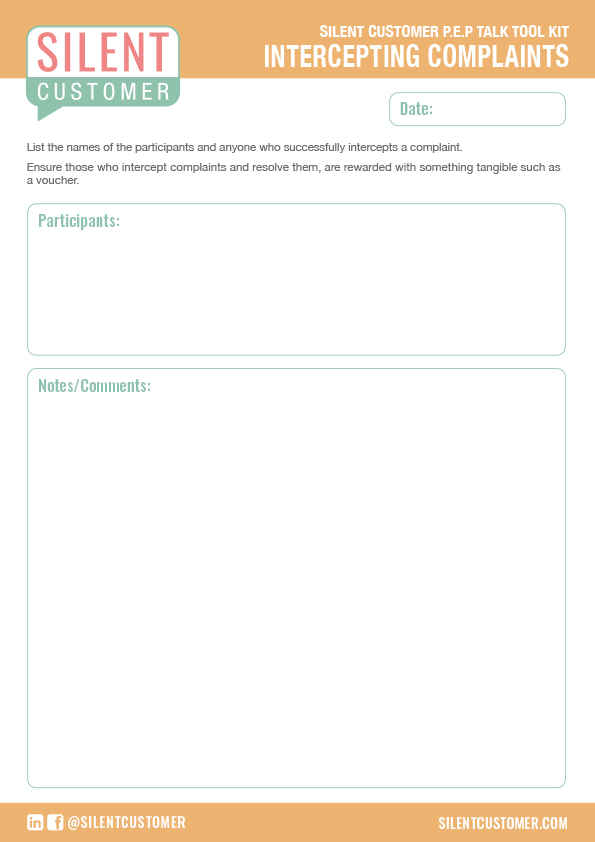
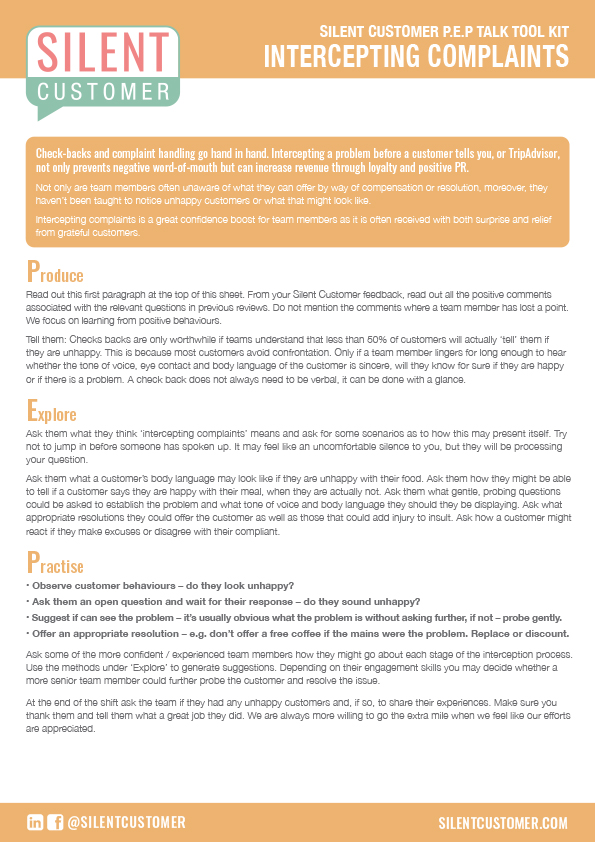
Intercepting Complaints

Check-backs and complaint handling go hand in hand. Intercepting a problem before a customer tells you, or Google, not only prevents negative word-of-mouth but can increase revenue through loyalty and positive PR.

Use our fun PEP talk sheets to support your front-line teams in learning how to avoid complaints.

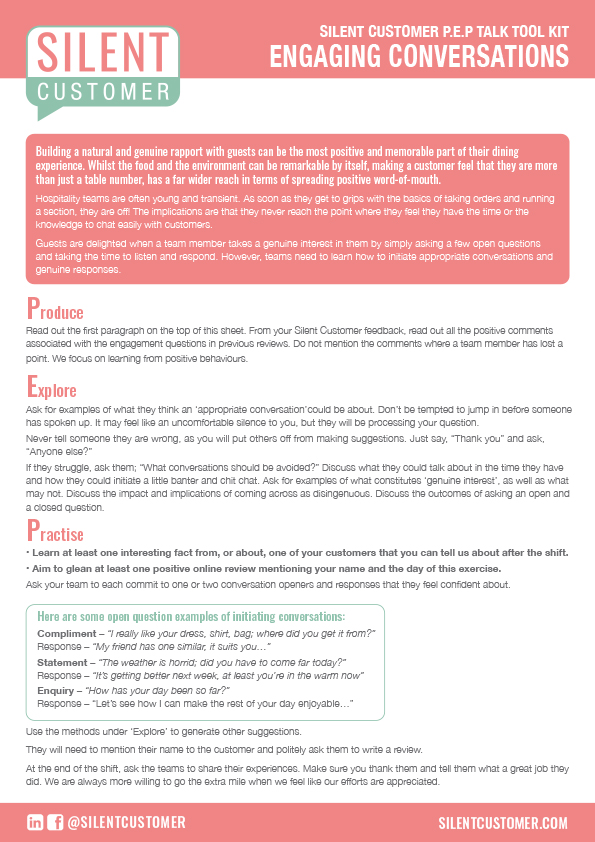
Engaging Conversations

Building a natural and genuine rapport with guests can be the most positive and memorable part of their dining experience. Whilst the food and the environment can be remarkable by itself, making a customer feel that they are more than just a table number, has a far wider reach in terms of spreading positive word-of-mouth.

Use our fun PEP talk sheet to support your front-line teams in learning how to have engaging conversations.

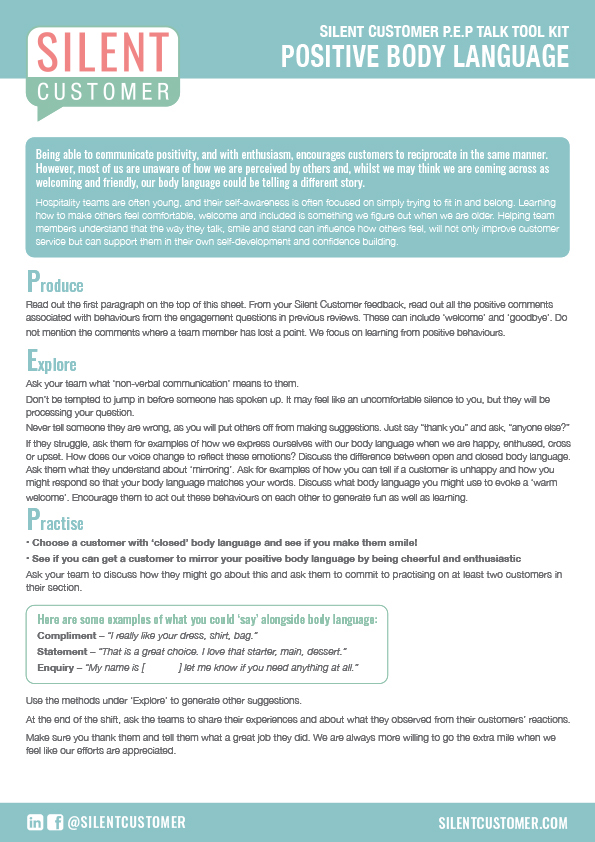
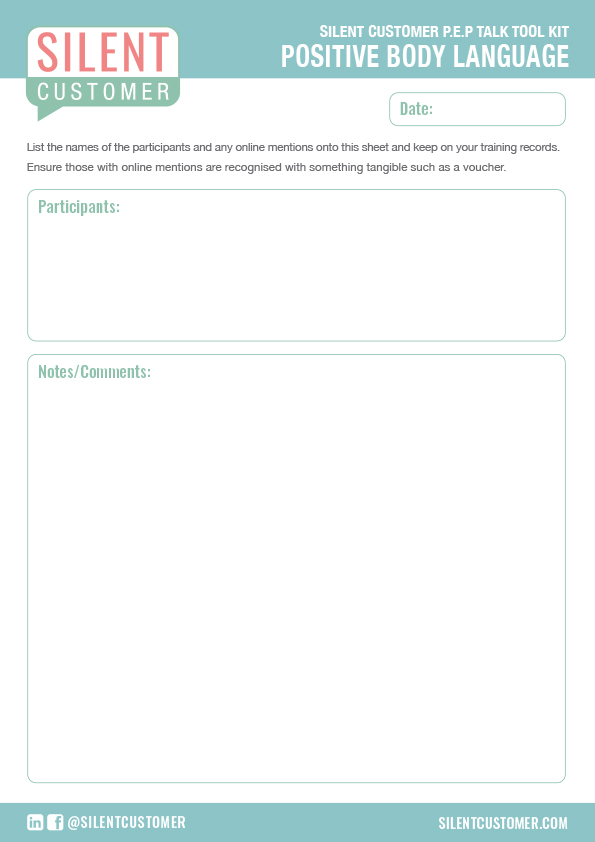
Positive Body Language

Being able to communicate positivity, and with enthusiasm, encourages customers to reciprocate in the same manner. However, most of us are unaware of how we are perceived by others and, whilst we may think we are coming across as welcoming and friendly, our body language could be telling a different story.

Use our fun PEP talk sheet to support your front-line teams in understand the importance of self-awareness.

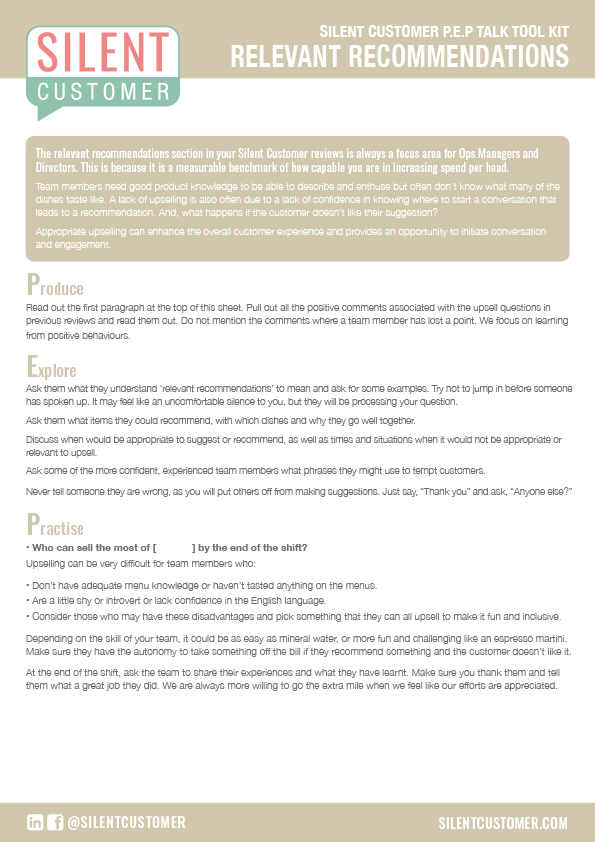
Relevant Recommendations

Team members need good product knowledge to be able to describe and enthuse, but often don’t know what many of the dishes taste like. A lack of upselling is also often due to a lack of confidence in knowing where to start a conversation that leads to a recommendation.

Use our fun PEP talk sheet to support your front-line teams in learning how to upsell.