A useful mystery shopping programme starts with a clear business question and ends with evidence people can act on. Here is how we design, deliver and use that evidence with you.
Seven clear stages. We work closely with you on the design, manage the fieldwork and validation, and stay involved in reporting, action and review.
We start with your objective, not a standard questionnaire. That could be improving the customer journey, checking service standards, understanding lost opportunities or exploring why performance varies. We agree the decisions the evidence needs to support.
We map the important journey moments and define what customers should see, hear or be asked. Then we choose the right scenarios, channels, sample and measures. Focused questionnaires capture useful evidence without creating unnecessary reporting.
We select people from our established UK-wide community whose profile fits the journey. Where specialist requirements apply, we can recruit accordingly. Each mystery customer receives a clear scenario and evidence requirements.
Mystery customers carry out the agreed visits, calls or digital journeys. Depending on the programme, we collect factual observations and supporting evidence such as narrative, receipts, emails, photographs or call recordings.
Before results are released, we review completeness, consistency and supporting evidence. Where something is unclear we seek clarification. Validation does not change what happened; it makes the evidence fair, reliable and usable.
Validated results are available in Shopmetrics. We then shape the key findings into outputs that suit the people who will use them: practical feedback for frontline teams, focused summaries for senior stakeholders and, where needed, workshops to agree next steps.
The value comes from what happens after the report. We review the evidence with you, focus on behaviours worth recognising or changing and adapt future measurement to check progress. This avoids repeating the same visits without learning anything new.
Shopmetrics provides direct access to validated results, programme views and trends. Our wider outputs make the same evidence easier to use at different levels of the business.
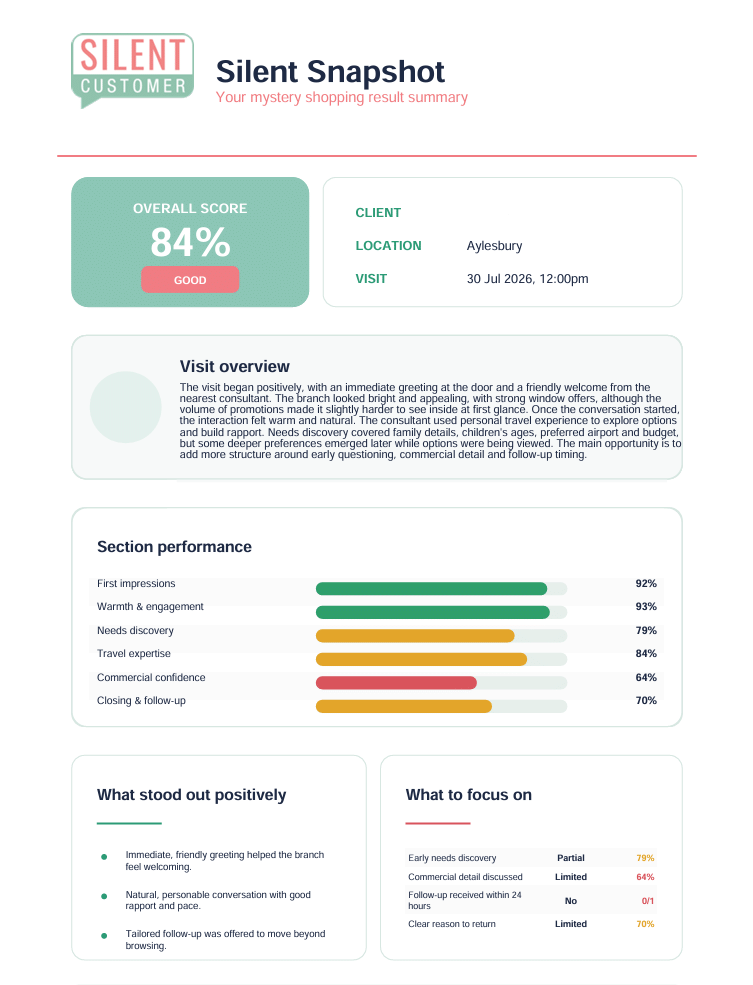
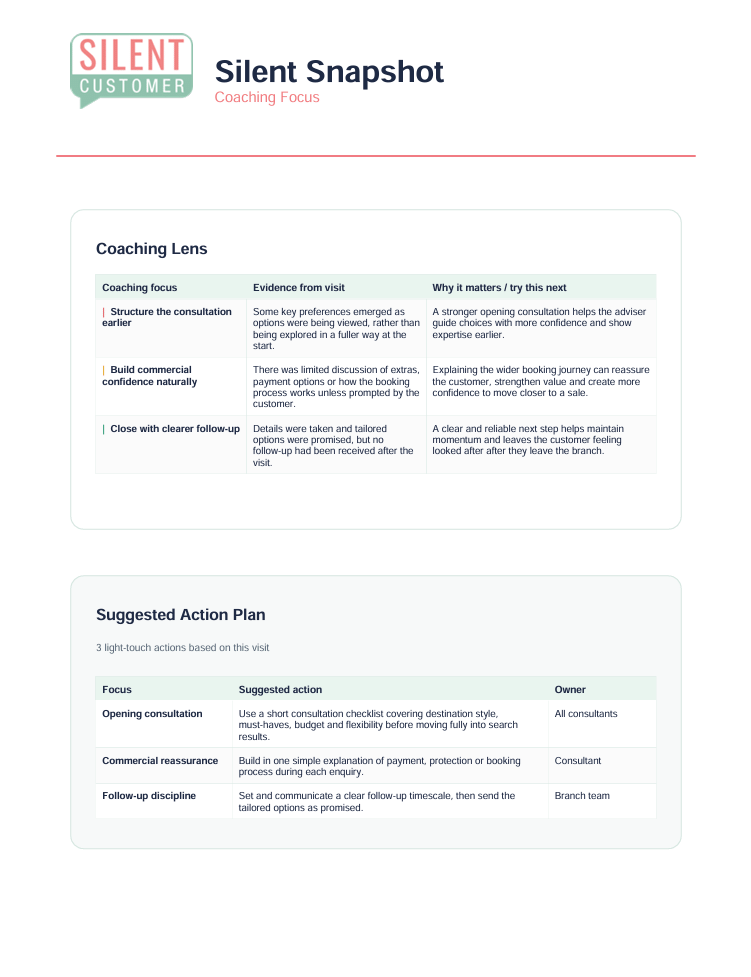
Silent Snapshot gives teams the visit evidence and a practical coaching focus.
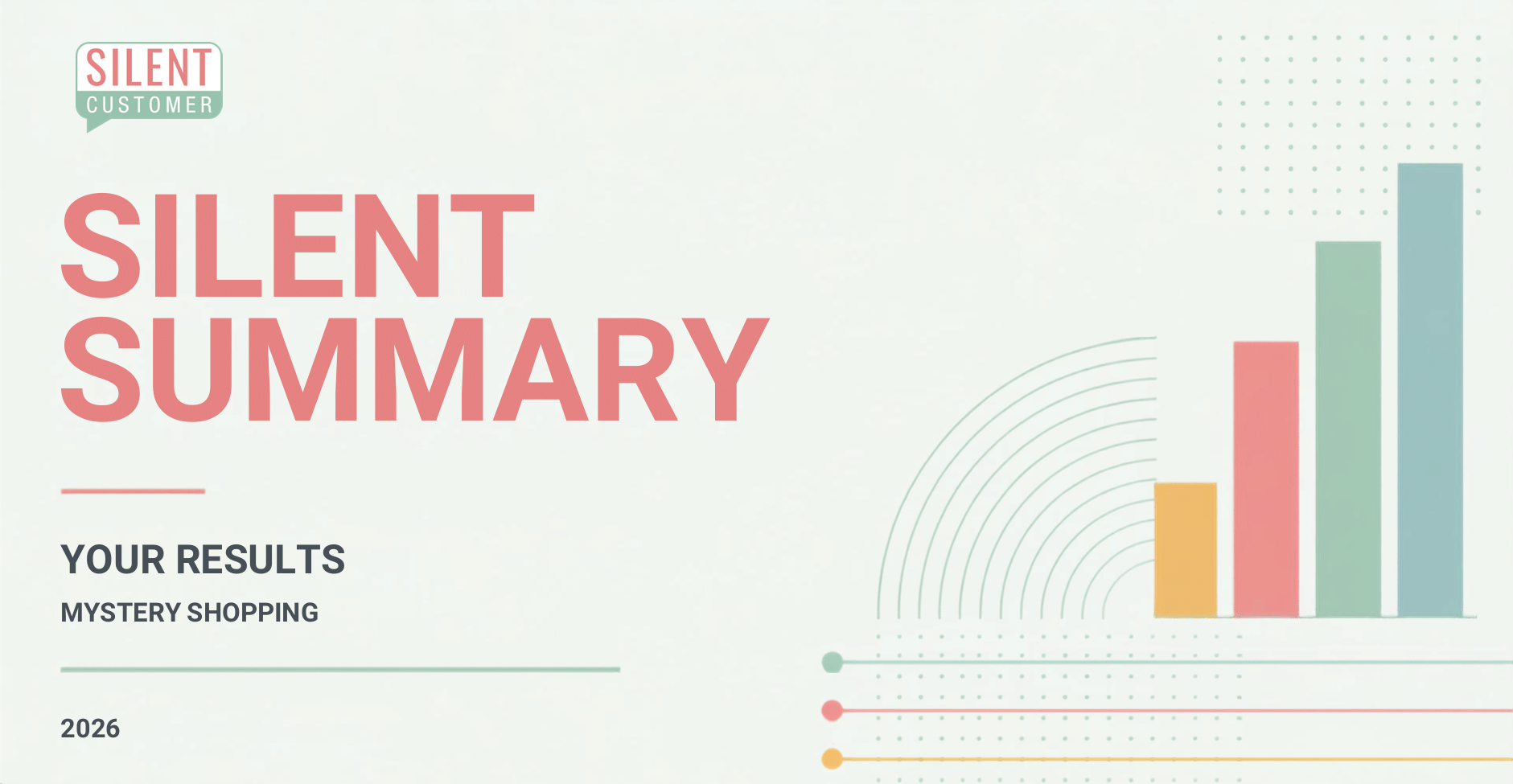
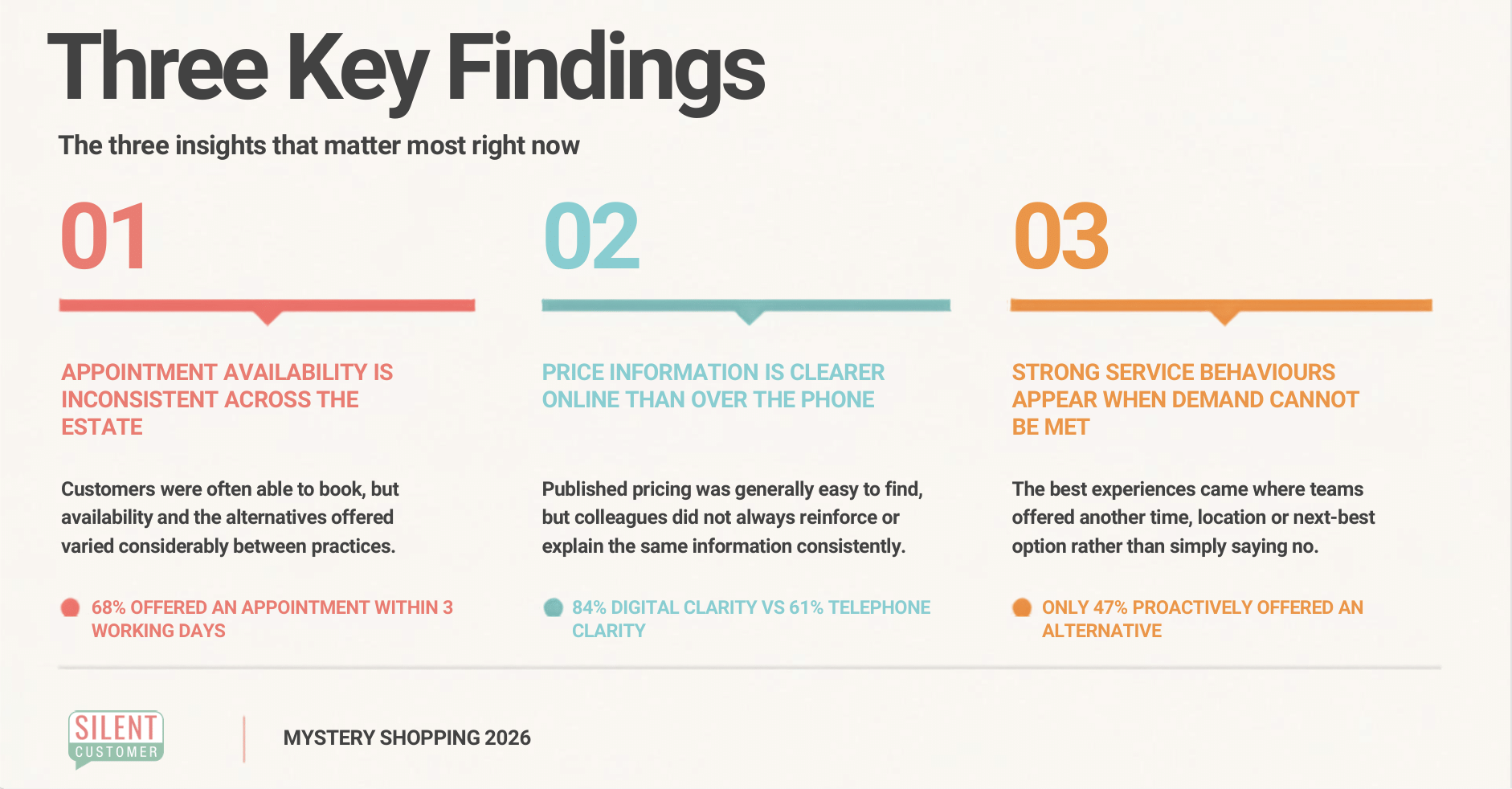
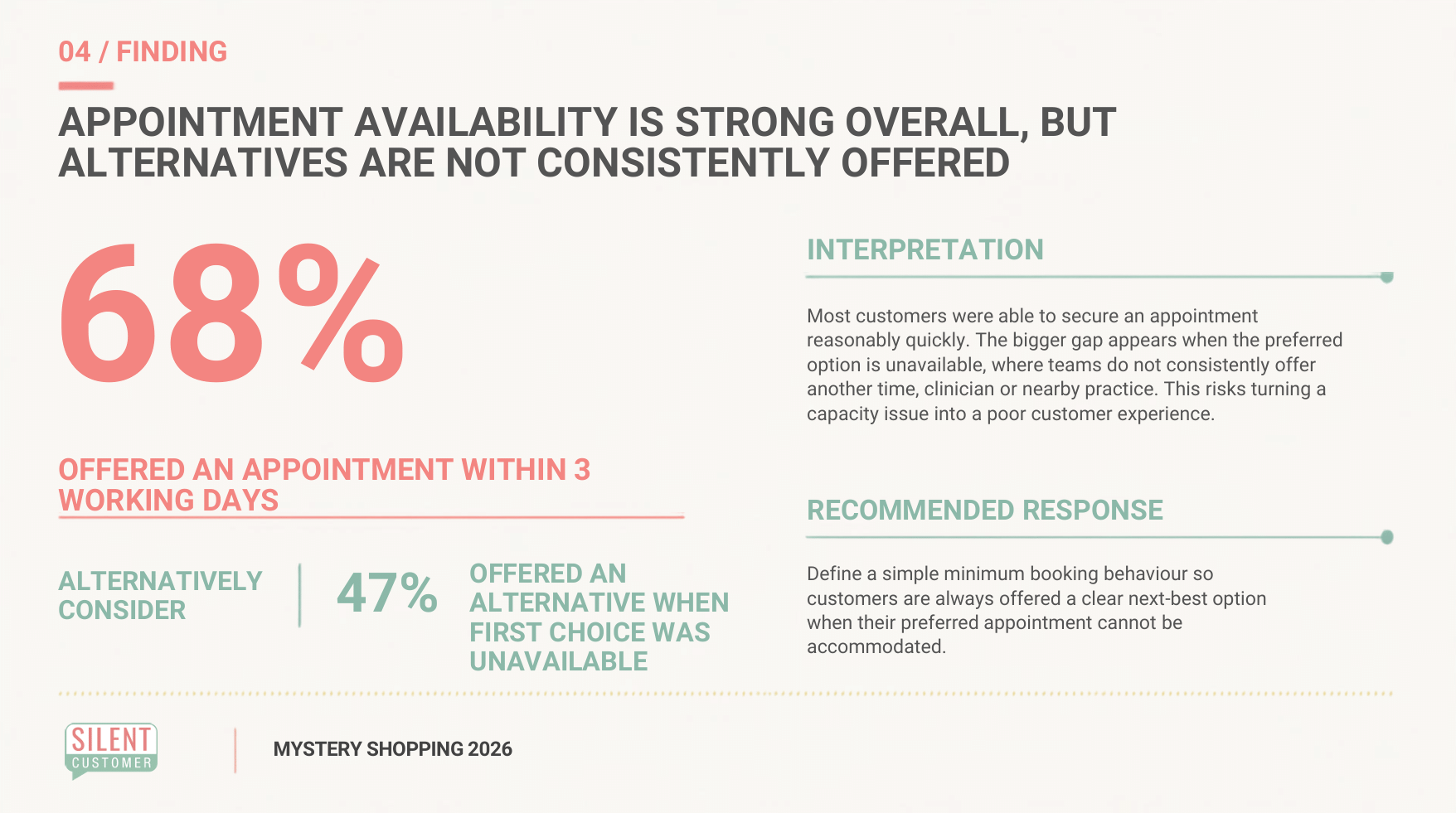
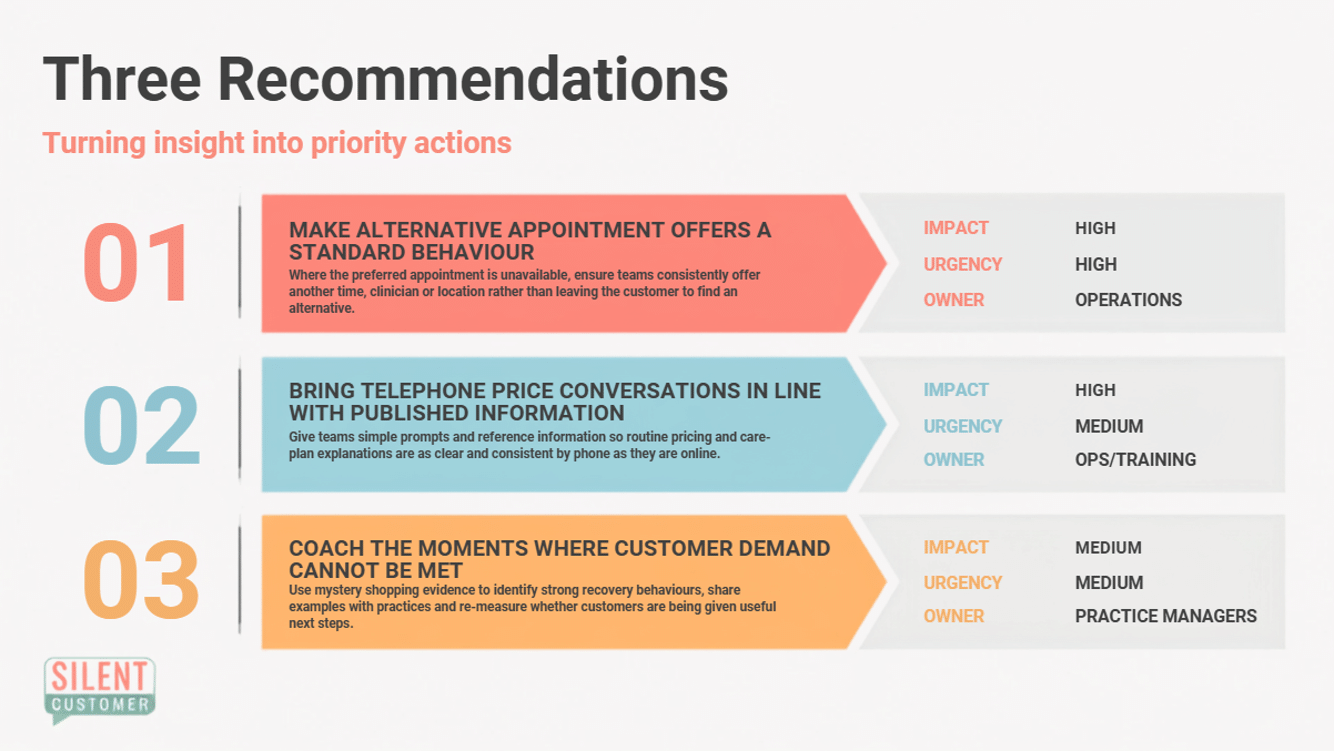
Silent Summary distils the programme into the findings, implications and priorities.
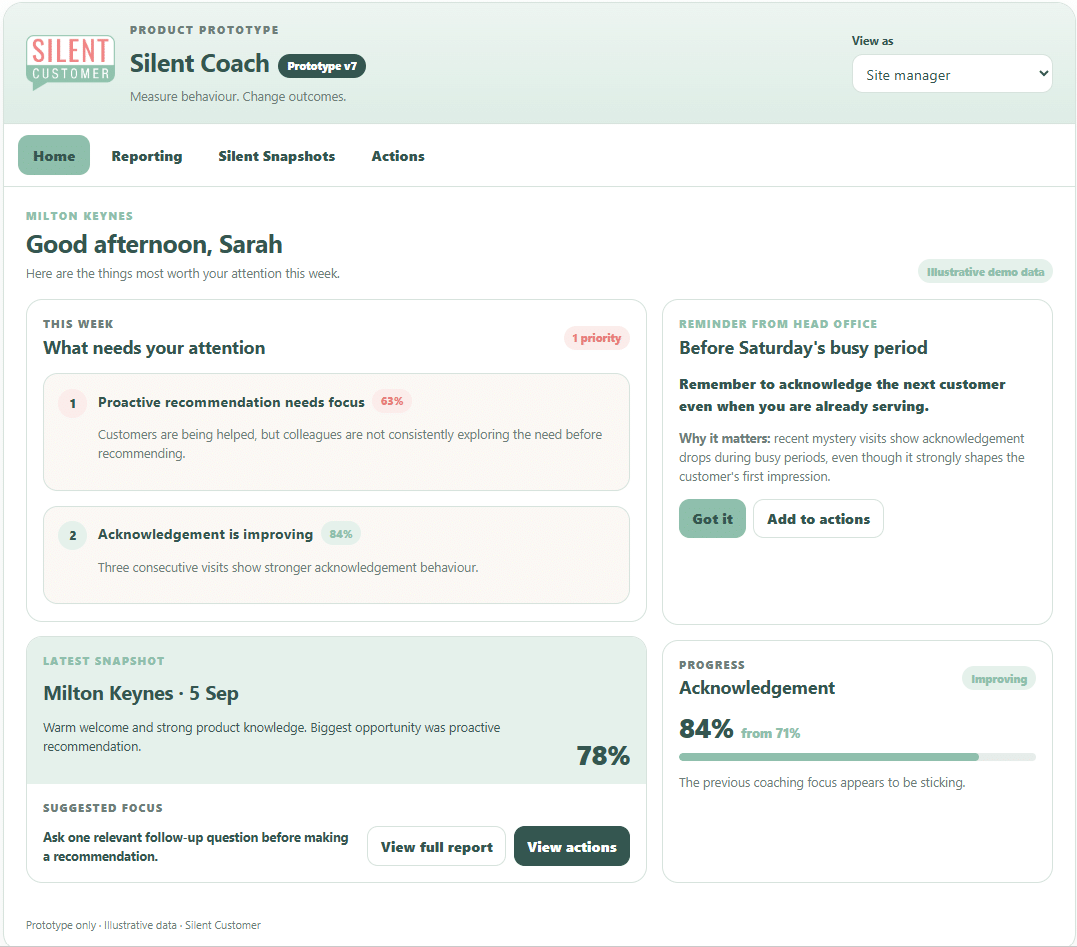
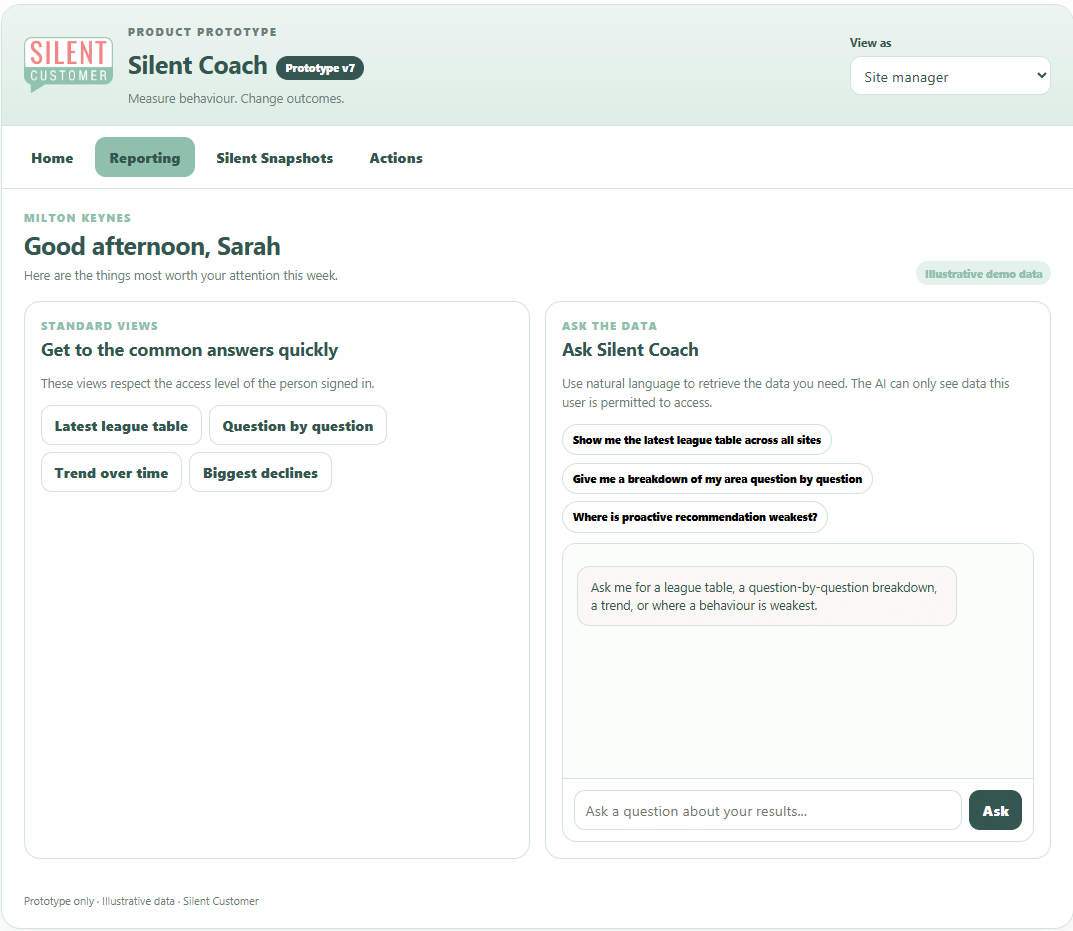
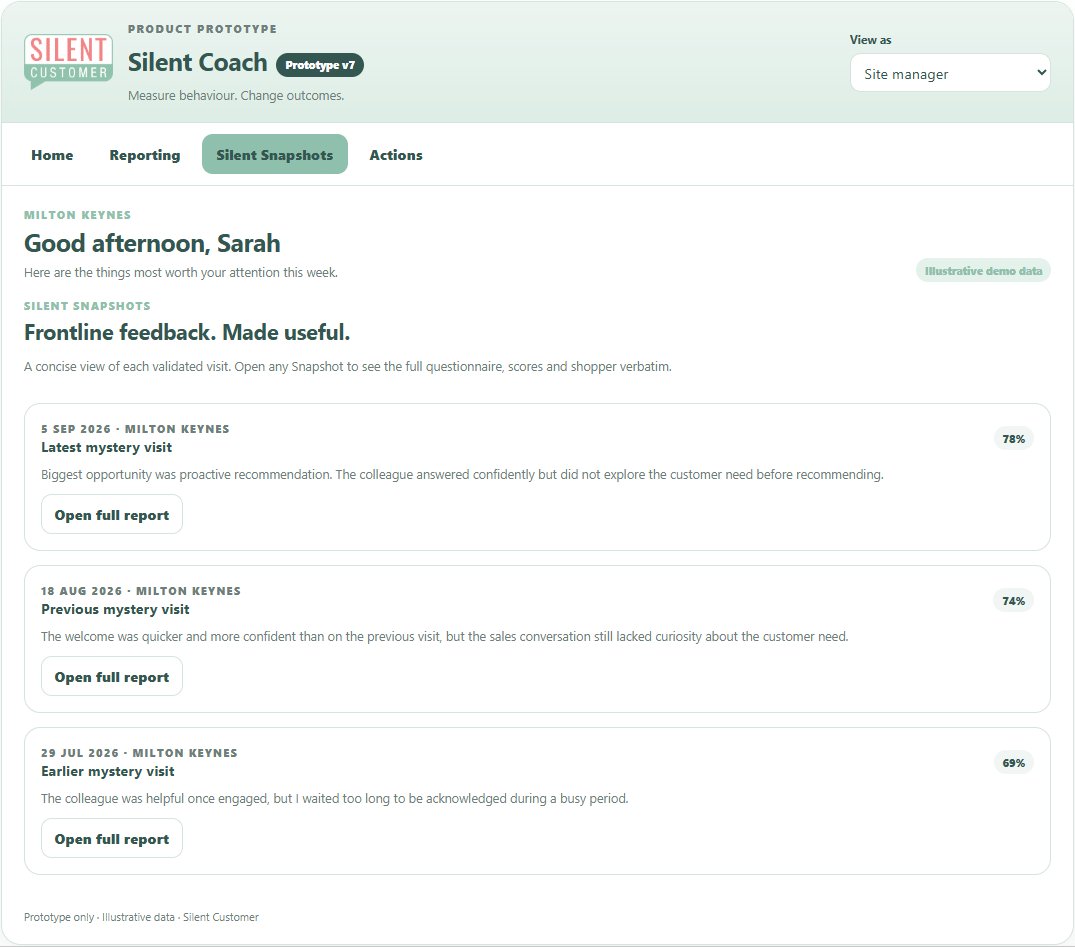
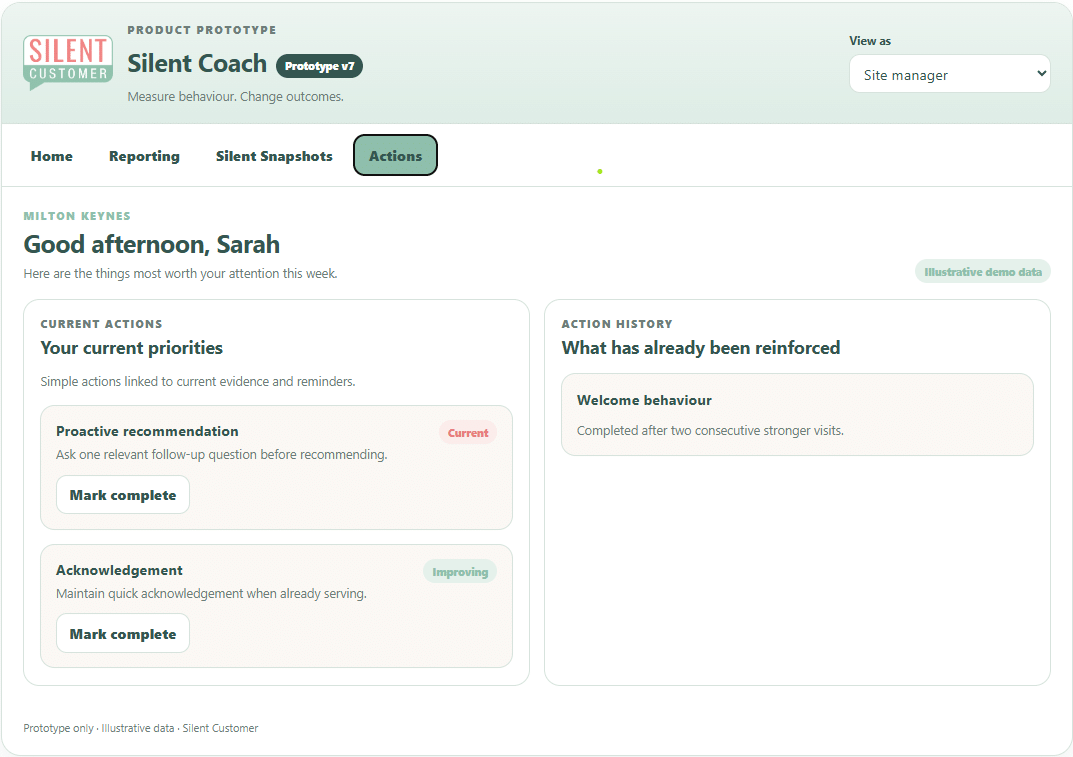
Silent Coach supports prompts, actions and re-measurement as the concept develops.
Currently in development
Our established UK-wide mystery customer community. We select and brief people around the journey and recruit specialist profiles where needed.
Yes. Programmes can combine in-person, telephone, digital and multi-channel experiences. We recommend the method that best answers your question.
Every result is validated before release, including review of the narrative, scores and supporting evidence. We seek clarification where anything is incomplete or inconsistent.
It depends on the purpose. Some questions need targeted journeys or a short pilot; others benefit from repeat waves to track consistency and behaviour change. We recommend a cadence that supports the decisions you need to make.
The timetable depends on the journey, sample, locations and any specialist recruitment. We agree the delivery plan and reporting timings with you before fieldwork begins.
The number and type of journeys, locations, channels, complexity and reporting or insight outputs needed. We scope the approach and provide a clear cost before starting.
Find out more about the service and where it can help.
Start with the outcome. We will help build the right evidence around it.
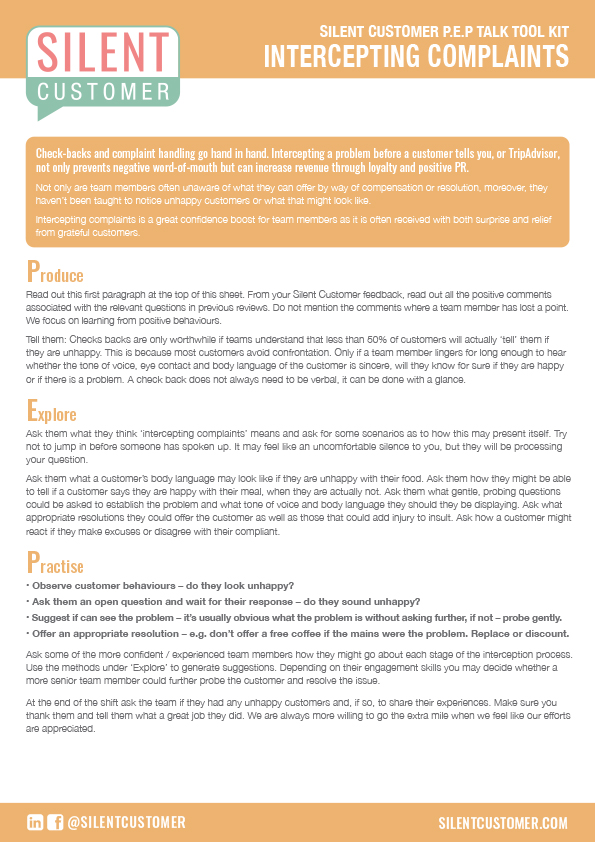
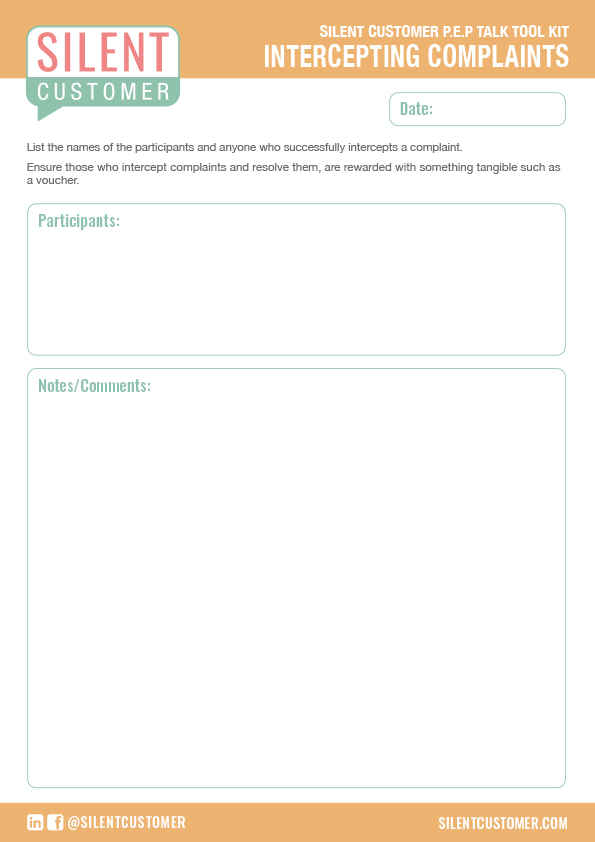
Check-backs and complaint handling go hand in hand. Intercepting a problem before a customer tells you, or Google, not only prevents negative word-of-mouth but can increase revenue through loyalty and positive PR.
Use our fun PEP talk sheets to support your front-line teams in learning how to avoid complaints.
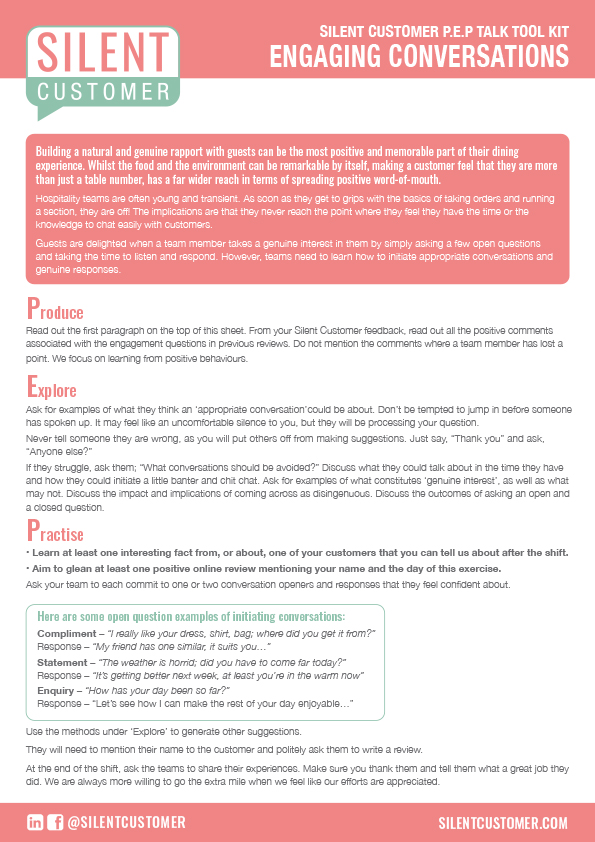
Building a natural and genuine rapport with guests can be the most positive and memorable part of their dining experience. Whilst the food and the environment can be remarkable by itself, making a customer feel that they are more than just a table number, has a far wider reach in terms of spreading positive word-of-mouth.
Use our fun PEP talk sheet to support your front-line teams in learning how to have engaging conversations.
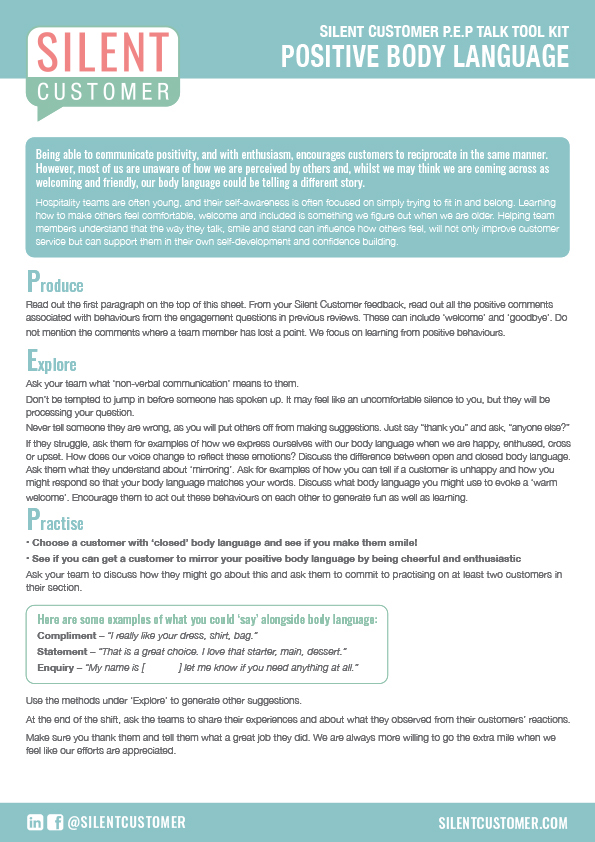
Being able to communicate positivity, and with enthusiasm, encourages customers to reciprocate in the same manner. However, most of us are unaware of how we are perceived by others and, whilst we may think we are coming across as welcoming and friendly, our body language could be telling a different story.
Use our fun PEP talk sheet to support your front-line teams in understand the importance of self-awareness.
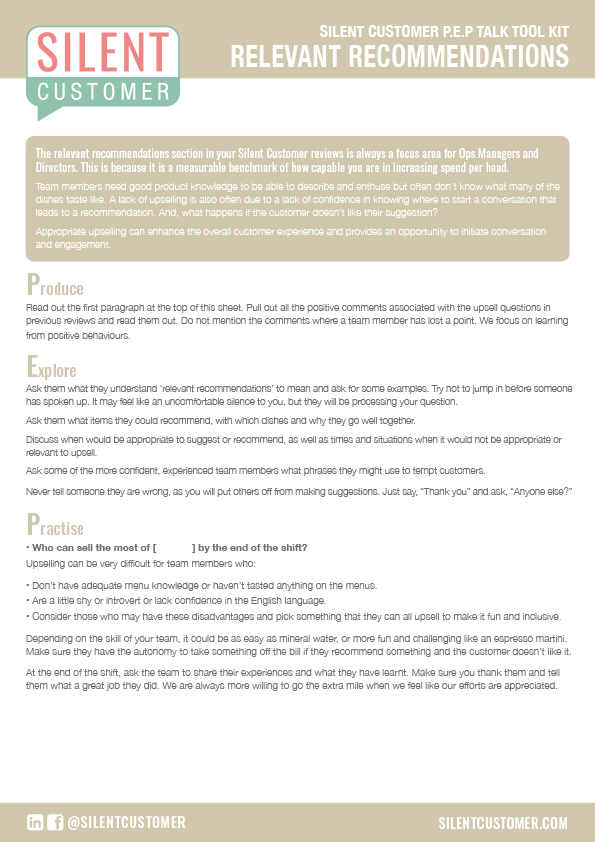
Team members need good product knowledge to be able to describe and enthuse, but often don’t know what many of the dishes taste like. A lack of upselling is also often due to a lack of confidence in knowing where to start a conversation that leads to a recommendation.
Use our fun PEP talk sheet to support your front-line teams in learning how to upsell.