
Your ideal customer journey might be completely clear at head office. But is that what the customer actually experiences?
The proposition and journey may be designed centrally, but the experience certainly isn’t. That gets created moment by moment, across channels, through processes and through people.
And customers have an inconvenient habit of not following the neat journeys we design for them.
They browse online, check availability, visit a store, ask for advice, order something for collection or delivery and, occasionally, decide they didn’t really want it after all and bring it back.
We might view those as different experiences within digital, store, collection, delivery and returns. The customer doesn’t. To them, it’s simply one experience with the brand. So what happens when those individual parts work perfectly well on their own, but not together?
It’s often what happens between the channels that gets interesting
Consider a fairly ordinary retail journey.
A customer researches a product online and checks that it is available at their local store.
So far, so good.
They make the journey in.
They can’t find it.
A colleague checks the system. The system confidently says it is there.
The shelf appears to have a different opinion.
Nobody can locate it.
The customer is advised to order online instead, so they do, choosing click and collect or home delivery.
A few days later, they return to collect it or it arrives at their door.
Then, later on, they need to make a return or an exchange.
And looked at individually, everything might be working.
The website worked.
The store was open.
The ordering platform took the order.
The delivery arrived.
The returns process existed.
Tick, tick, tick.
But how did the whole experience actually feel to the customer?
Did what they saw online match what happened when they arrived in store?
When it didn’t, was the colleague able to help?
Did sending the customer back online solve the problem, or just move it somewhere else?
Did collection, delivery and returns feel like natural parts of one journey, or like encounters with entirely different businesses?
This is perhaps one of the more interesting things about omnichannel retail.
Customers don’t know or particularly care which team owns the website, the stock system, the store operation or the returns process.
They certainly don’t know the organisation chart.
They experience the handovers between them.
That’s often where confidence in a brand is either reinforced or chipped away.Perhaps the question isn’t simply:
How well is each channel performing?
Perhaps it is:
How well do those channels work together when a real customer starts moving between them?
And then there are people
Even if every system talks beautifully to every other system, there is still another important variable.
People.
Imagine our customer has done all the research, checked the price and confirmed the product is in stock.
Then something goes wrong and they need some help.
This is where behaviours start to matter.
Because the colleague isn’t just there to complete a process.
There is an opportunity to make the experience feel personal.
To make the customer feel understood.
And occasionally, to do something a little better than they expected.
The customer could ask where the product is and simply be pointed towards aisle 12.
Job done?
Technically, perhaps.
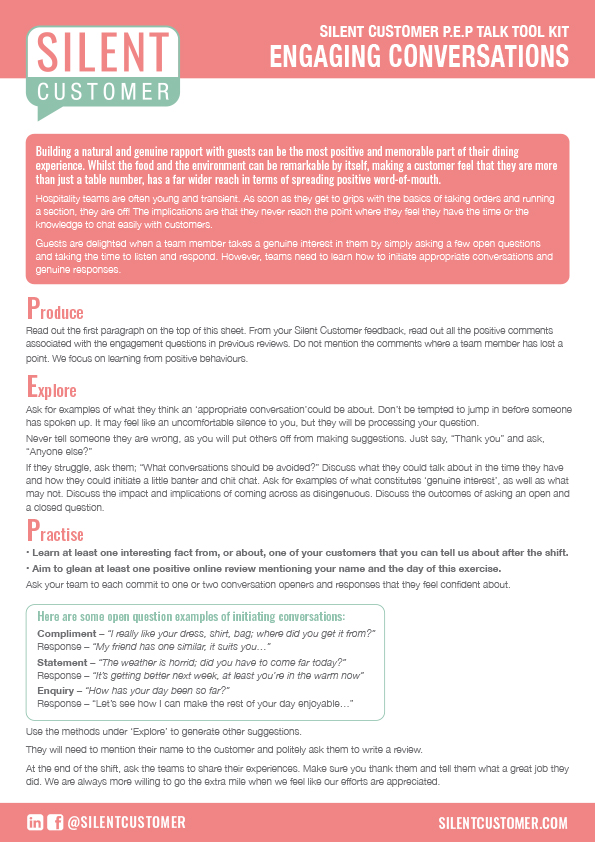
Or the colleague could take an interest in what they are looking for, ask a couple of thoughtful questions, understand what they have already researched and help them make the right choice.
And if the product really isn’t there?
Again, there are choices.
Explain that it’s out of stock and leave the customer to work out what to do next.
Or take ownership. check another location, explore an alternative or arrange delivery. Simply make the next step easier. Same store.
Same systems.
Same processes.
Very different experience, shaped by different behaviours.
And perhaps, more importantly, by how those behaviours make the customer feel.
Listened to rather than processed.
Reassured rather than uncertain.
Looked after rather than passed on to somebody else.
Occasionally, even pleasantly surprised.
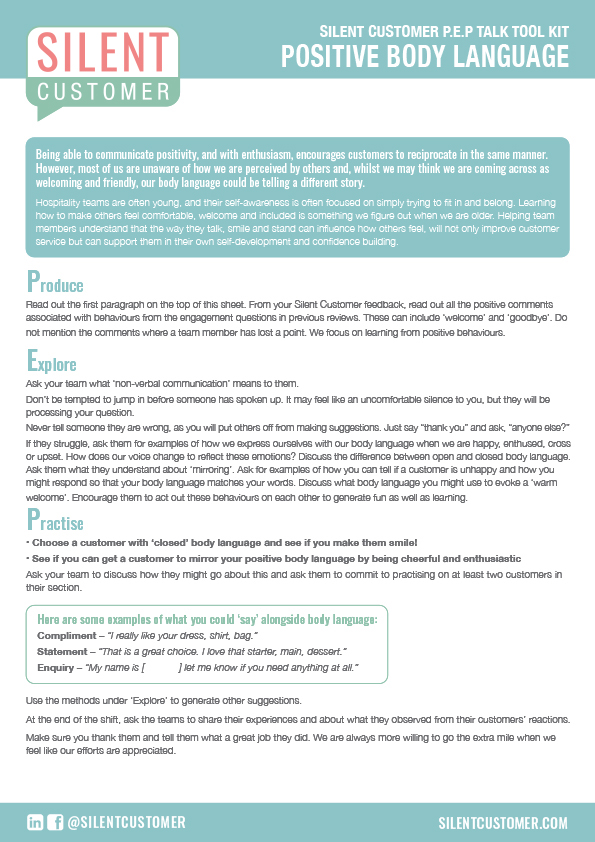
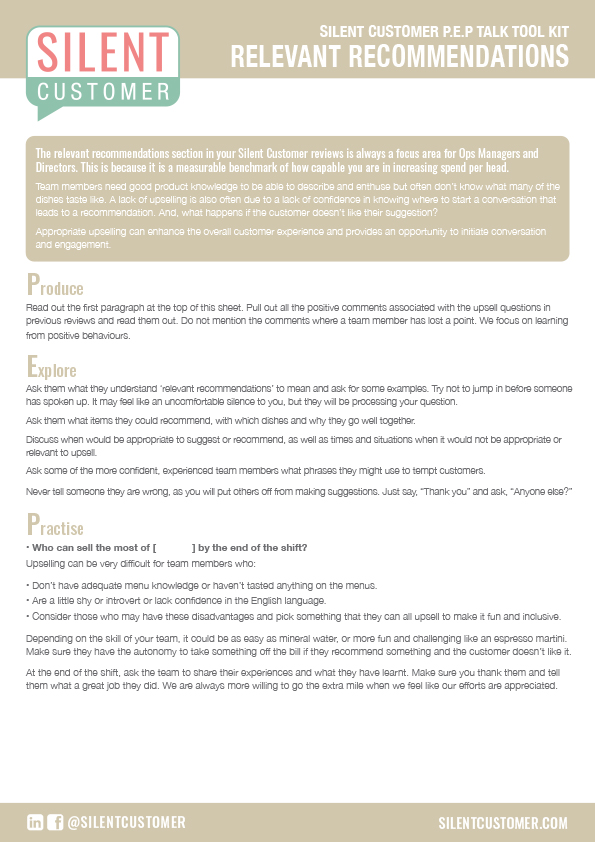
Aren’t these often the moments we remember? Not necessarily the huge gestures. Just somebody taking ownership, showing genuine interest or making something easier than we expected it to be.
Which brings us to measurement
Retailers are hardly short of data. In fact, they probably have more than they can easily make sense of.
Sales, NPS, complaints, reviews, availability, conversion, labour and operational KPIs.. There is certainly no shortage of numbers.
And those numbers matter.
But here’s the interesting bit.
Do they tell you what to do next?
Knowing that Store A scored 87 and Store B scored 74 tells you something. What it doesn’t necessarily tell you is why.
Perhaps Store A has colleagues who are particularly good at taking ownership when something goes wrong. Perhaps Store B has a process that makes that harder.
Or perhaps the issue isn’t really in the store at all. It started online, in a stock system or somewhere else in the journey.
That, for us, is where measurement starts to become much more interesting.
Not just knowing where performance varies, but understanding what is behind that variation and what people can actually do about it.
Because imagine being on the shop floor and being told that your score has moved by three points.
Useful? Possibly.
Likely to transform your Tuesday? Probably not.
But being shown what customers respond to, where a different behaviour could make an interaction easier, or how great colleagues are handling the same situation differently – that gives you something you can actually use.And it works both ways.
Measurement shouldn’t only shine a light on the things that need to improve. It can uncover great performance too.
A colleague who consistently makes customers feel special. A team that has found a better way of handling a difficult handover. A store where a process seems to work particularly well.
Those are opportunities: to recognise people, share what works and ask, could we do more of this elsewhere?
Turning insight into something useful
This is where the conversation moves from measurement to activation.
And activation doesn’t have to mean a huge transformation programme.
Sometimes it might be a better coaching conversation between a store manager and a colleague. Sometimes it might be giving people more product knowledge or confidence to deal with a particular situation.
Perhaps a training programme needs to change because the insight is showing that customers value something different from what was expected.
Or perhaps the problem is a process. Colleagues are doing everything being asked of them, but the system is making it unnecessarily hard to give the customer a good experience.
That is an important distinction.
There isn’t much value in telling a colleague to deliver a better experience if the process they are working with keeps getting in the way.
Equally, if somebody is already doing something brilliantly, shouldn’t we be asking how we recognise it, reinforce it and help other people learn from it?
This is why practical insight matters.
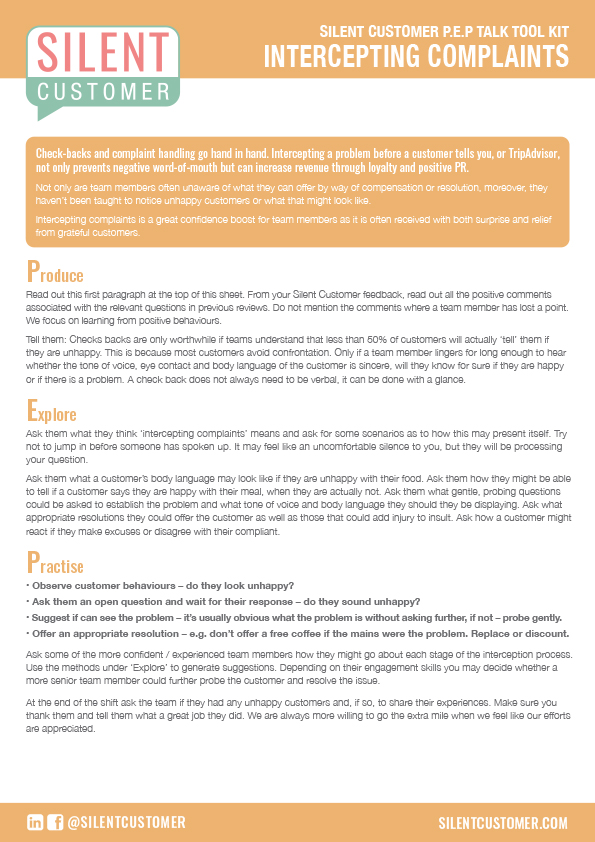
For someone on the shop floor, improvement needs to be easy to understand and easy to activate:
What does great look like? What could I do differently? Why does it matter to the customer?
For leaders:
What should we coach? What needs to change? Are we giving colleagues the tools and freedom to do the right thing?
None of that comes from a score alone.
It comes from understanding what is actually happening in the experience.
And then you get to ask another question
But has anything actually changed?
That’s when measuring again becomes useful.
Not just for another score, but going back with a purpose.
Did those behaviours become more consistent?
Did the new process make life easier for the colleague as well as the customer?
Has an improvement that worked brilliantly in one store started to appear elsewhere?
And, ultimately, did it make the experience better for the customer?
That feels like a much more useful cycle.
See what is happening. Understand why. Decide what to do. Help people do it. Then see whether it worked.
Perhaps that’s the point
A customer proposition doesn’t really live in a strategy document. It lives in thousands of small moments.
A stock check, a handover, a conversation, a problem solved, a return made easy.
A colleague deciding to take ownership rather than pass the customer somewhere else.
So perhaps the most valuable measurement programmes aren’t necessarily the ones with the best dashboards or the most detailed scores.
Maybe they are the ones that help us understand the experience well enough to have better conversations.
What are we doing really well, and why?
What could we make better?
What is getting in the way?
And what can we give our teams that will genuinely help them do something about it?
Because measurement can identify an opportunity.
Practical insight is what gives people the chance to turn that opportunity into change.